
Why Does Investing in High-Quality Craft Beer Equipment Improve Your Brew Quality?
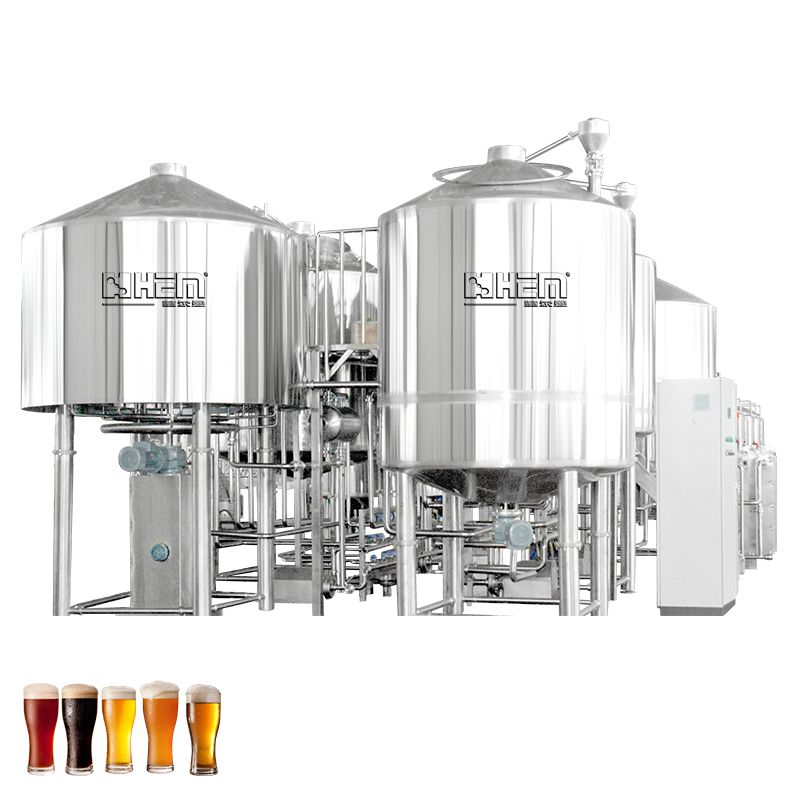
Brewery operational data indicates that facilities utilizing precision-engineered hardware achieve a 15% higher extract recovery rate compared to those operating with low-grade, inconsistent systems. In the context of 2026 market standards, where energy costs for thermal processes have risen by approximately 7% annually, the implementation of advanced heat recovery systems—such as wort coolers with a 95% thermal efficiency rating—is no longer optional for maintaining margins. Furthermore, internal studies on batch consistency demonstrate that automated fermentation management, capable of maintaining temperature stability within ±0.2°C, reduces off-flavor compound production, such as acetaldehyde and diacetyl, by nearly 22%. By mitigating oxygen ingress through the use of high-integrity seals and automated purge cycles, breweries can extend the shelf life of their packaged products by up to 40 days. Investing in robust infrastructure is a calculated strategy to stabilize production output and minimize the financial impact of batch contamination.
High-quality craft beer equipment utilizes 316L stainless steel with an interior roughness average (Ra) of less than 0.4 µm, which inhibits bacterial adhesion. Systems must be equipped with Variable Frequency Drive (VFD) motors to maintain fluid shear stress below 2.0 Pa, preventing the extraction of unwanted tannins during whirlpool operations. Thermal transfer surfaces require coverage exceeding 80% to facilitate rapid, even temperature increases without scorching the wort, ensuring clean flavor profiles. Oxygen sensors integrated into the piping must detect dissolved oxygen concentrations lower than 30 ppb to maintain product freshness over extended storage durations.
Precision-engineered lautering manifolds improve wort clarity by ensuring an even flow through the grain bed, increasing final throughput by 10%.
The use of high-thickness, pressure-rated vessels allows for natural carbonation techniques that utilize 100% of the CO2 produced during fermentation. Multi-zone cooling jackets allow for independent temperature management of the cone and sidewall, providing the versatility required to produce diverse styles from high-gravity stouts to delicate lagers. PID-based control systems regulate glycol flow to keep temperatures within 0.1°C of the set point, which improves yeast performance and reduces fermentation duration by 15%.
| Component | Material Standard | Operational Benefit |
| Gaskets | FDA-compliant EPDM | Seal integrity up to 140°C |
| Piping | Sanitary Grade 316L | Minimal microbial harbor points |
| Valves | Sanitary Butterfly | Full-flow hygiene compliance |
Automated Cleaning-in-Place (CIP) skids utilize high-pressure spray balls that cover 100% of the interior vessel surface area during 20-minute cycles. These systems maintain caustic concentrations at 2% with temperature monitoring to ensure effective biofilm removal without damaging tank finishes. By reducing manual cleaning labor by 40%, operators can focus on recipe development and process optimization, which directly impacts the quality of the final output.
Real-time data logging tracks temperature, pressure, and flow rates at 5-second intervals, providing a detailed history for every batch produced.
Modular control panels feature expandable PLC capacity, allowing for the future integration of additional sensors or automated dosing equipment without replacing existing hardware. Digital flow meters provide volume measurements with 99% accuracy, significantly reducing spillage and improving ingredient usage efficiency. Centrifugation equipment removes yeast solids to below 5 microns, resulting in brilliant clarity without the use of chemical fining agents that might strip flavor compounds.
High-speed centrifuges operating at 7,000 RPM process 60 hectoliters per hour, reducing cold-side maturation time by 50%.
Industrial-grade pumps handle high-density mashes without cavitating, ensuring consistent flow through heat exchangers and filtration systems. This capability is essential for brewing high-gravity beers, where wort viscosity can increase by 20% compared to standard recipes. Maintaining pump performance through regular 500-hour service intervals prevents mechanical failure and ensures the ongoing reliability of the brewing schedule.
Automated ingredient dosing systems maintain hop addition accuracy within 1 gram per 50 kilograms, ensuring repeatability across large-scale production runs.
Consistent CO2 monitoring in the packaging line keeps purity levels at 99.9%, preventing oxidative spoilage that often occurs during the canning or bottling process. Reliable equipment allows for the creation of standardized operating procedures that keep production metrics steady, ensuring that the beer quality remains high across thousands of individual batches.